
Table of Contents
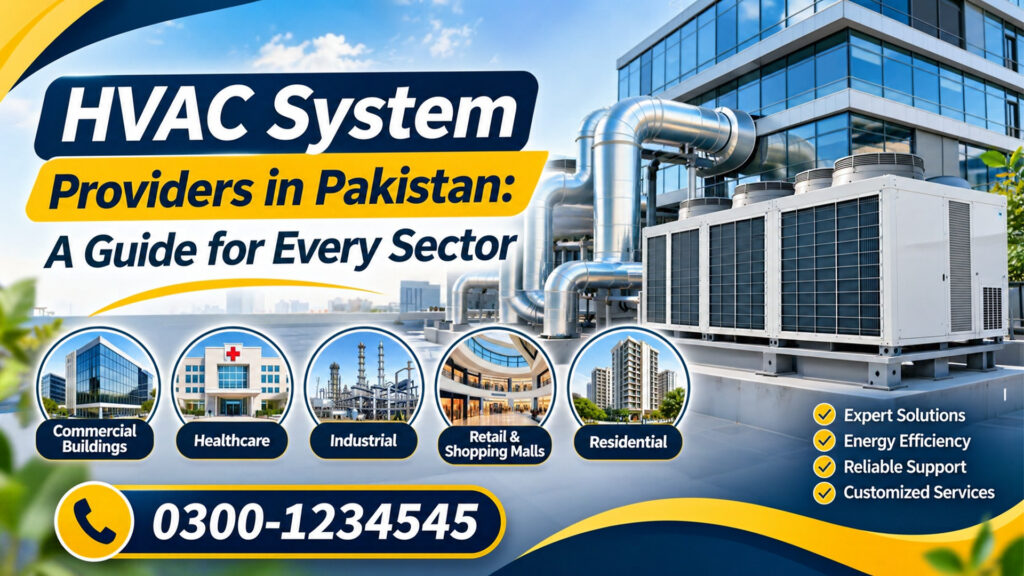
ToggleIn a Lahore summer, a failed air conditioning plant creates problems fast. A hotel lobby can turn stuffy within an hour, a hospital ward can become unsafe for patients, and a production line can lose output. In each case, the equipment matters, and so does the team behind it. The HVAC system providers you choose decide how well your system is designed, installed and supported for years after handover.
This guide explains which systems suit cafes, hotels, hospitals, factories and industrial plants. It also covers what drives project cost and how to compare suppliers before you sign. It comes from The AC Hub, a Lahore-based HVAC company and certified official 3S authorized dealer serving residential, commercial and lite-commercial customers across Pakistan.
What you’ll learn: how to match the right cooling system to your building, and how to choose a supplier you can rely on.
Quick answer: HVAC stands for heating, ventilation and air conditioning. The right system depends on your building type, occupancy, operating hours and air quality needs. Cafes and hotels need comfort and zone control. Hospitals need clean air and strict temperature control. Factories and industrial sites need high capacity and durability. Choose a supplier that offers a site survey, load calculation, genuine branded equipment, expert installation and written warranty support.
Key takeaways:
A commercial HVAC system controls four things inside a building:
Homes usually need simple room-by-room cooling. Commercial buildings are different. They have more people, longer operating hours, heat from equipment and kitchens, and often stricter hygiene or safety rules. That is why system selection and design need more care.
Every building type has its own priorities. Here’s how to approach each one.
Hospitality spaces live on guest comfort. A cafe has a busy dining area, kitchen heat and peak hours that shift through the day. A hotel has lobbies, restaurants, banquet halls and dozens of guest rooms, all used at different times.
A well-planned hvac system for cafe/hotel use balances comfort, quiet operation and running costs. Common choices include:
Kitchen exhaust and fresh air also need attention. Without them, cooking odors and heat drift into dining areas and push your cooling load higher. For hotels, reliable hot water matters too. Electric geysers, such as Ariston models, can support guest bathrooms and service areas.
Healthcare buildings carry the strictest requirements. An hvac system for hospital use must protect patients, staff and sensitive equipment, not just keep rooms cool.
Key priorities include:
Critical zones such as operating theaters and ICUs need engineered systems designed by qualified HVAC consultants, often based on recognized standards such as ASHRAE 170. General areas like OPDs, wards, waiting rooms and admin offices can often use cassettes, duct units or VRV/VRF systems. A good supplier will tell you clearly where each solution fits.
Production halls combine high ceilings, heavy machinery, large workforces and intense outdoor heat. An hvac system for factory use must deliver strong capacity and keep running through long shifts.
Practical options include:
Dust is a major issue in many Pakistani industrial zones. Choose units with accessible filters and coils, and plan a cleaning schedule from day one. Spot cooling at workstations can also improve worker comfort without cooling the entire roof space.
Large industrial sites, such as textile mills, food processing plants, pharmaceutical units and warehouses, often need more than general comfort cooling. A reliable hvac system for industries should match the process, the products and the building.
Consider these factors:
For process-critical environments, such as cleanrooms or cold storage, work with a specialist engineering consultant alongside your equipment supplier.
|
Sector |
Main Challenge |
Suitable Systems |
Key Design Priority |
|---|---|---|---|
|
Cafes and restaurants |
Kitchen heat and peak-hour crowds |
Cassette, floor standing, concealed duct |
Even cooling and odor control |
|
Hotels and guest houses |
Many rooms with different schedules |
VRV/VRF, concealed duct, cassette |
Individual room control and quiet operation |
|
Hospitals and clinics |
Infection control and stable conditions |
Engineered systems for critical zones; VRV/VRF, cassette and duct units for general areas |
Filtration, pressure control and redundancy |
|
Factories and workshops |
High ceilings, machine heat and dust |
Floor standing, package, ceiling exposed |
Capacity, durability and easy cleaning |
|
Industrial plants and warehouses |
Process loads and long operating hours |
Package units, large floor standing units, ducted systems |
Scalability and power reliability |
|
Offices and plazas |
Mixed spaces and varied occupancy |
VRV/VRF, cassette, split, duct |
Zone control and energy efficiency |
The right partner does much more than deliver boxes. Use these criteria to judge any supplier before you commit.
Buy through authorized channels. This gives you genuine products, valid manufacturer warranties and access to original spare parts. Grey-market units may look cheaper, but they can leave you without warranty cover when a compressor fails in July.
A reliable supplier will visit your building before recommending tonnage. They should consider floor area, ceiling height, occupancy, sun exposure, glass area, insulation, and heat from kitchens, lighting and machines. Undersized systems struggle on hot afternoons. Oversized systems waste power and may control humidity poorly.
Commercial projects involve rigging, copper piping, ductwork, drainage and three-phase electrical work. Ask who will install the system, what similar projects they have completed, and how they handle testing and commissioning.
Confirm what the warranty covers, how long it lasts and who handles service calls. Hospitals, hotels and factories can’t afford long downtime, so response time matters as much as the purchase price.
There is no fixed price for a commercial project, because every building is different. These are the main cost drivers:
When comparing quotes, match the tonnage, model numbers, inclusions and warranty terms. Two quotes for the same capacity can look very different once installation scope is included.
The AC Hub provides air conditioning and climate control solutions for homes, businesses and large commercial sites across Pakistan.
Our corporate team supplies cooling for offices, shopping malls, departmental stores, restaurants, gyms, high-rise buildings, plazas, wedding halls, marquees and industries. Because we offer split, cassette, concealed duct, floor standing, ceiling exposed, package and multi-zone systems, you get a recommendation based on your building rather than a single product we need to sell.
It depends on the size and layout. Small cafes often do well with cassette or floor standing units. Hotels usually benefit from VRV/VRF or concealed duct systems, which allow each room to control its own temperature.
It needs reliable temperature and humidity control, proper filtration, ventilation and backup capacity. Operating theaters and isolation rooms require engineered systems with pressure control and high-efficiency filtration, designed by qualified consultants.
Floor standing commercial units, package units and ceiling exposed units are common choices. Pick models rated for high ambient temperatures and plan regular filter and coil cleaning to handle dust.
A professional load calculation is essential. It considers floor area, ceiling height, workforce size, machine heat, process requirements and sun exposure. Guesswork often leads to poor cooling or wasted power.
Usually, yes, for buildings with long operating hours and changing loads. Inverter compressors adjust output to match demand, which can lower electricity bills over time.
Yes. The AC Hub offers nationwide delivery across Pakistan, along with installation and warranty support.
The AC Hub is a certified official 3S authorized dealer for Midea, Hitachi, Gree, Acson, TCL and Ariston, and also supplies Daikin and other leading brands.
The right system keeps guests comfortable, patients safe and production running through Pakistan’s toughest summers. Success comes from correct sizing, genuine equipment, careful installation and dependable after-sales support. Choosing the right HVAC system providers brings all of these together.
Talk to The AC Hub today. Call 0321-7227838 or WhatsApp 0300-1234545 for a consultation and project quote. You can also visit our office at Mezzanine Floor, Office No. 13 & 14, Bara Tower, Qartaba Chowk, Mozang Chungi, Lahore.
Welcome to The AC Hub, Pakistan’s trusted 3S AC dealer, committed to delivering comfort nationwide. We specialize in residential and commercial air conditioning, offering genuine products from top global brands. Our service includes expert installation, nationwide delivery, and full warranty support for your peace of mind. Experience unparalleled quality and customer satisfaction with every solution we provide.