


Pakistan’s climate is hard on any cooling system. Islamabad often goes above 40°C in June. Lahore adds heavy monsoon humidity on top of the heat. Winter nights in the north are cold enough to need reliable heating. A well-designed HVAC system handles all of these conditions and keeps power bills under control.
This guide explains how to compare hvac system providers and installation teams, which system types suit homes, offices, and restaurants, and what a turnkey project includes. It also covers the questions to ask before you sign a contract, so you can invest with confidence.
Quick answer: The Ac Hub is an HVAC company serving Islamabad and Lahore. We handle heat load calculation, system design, ductwork, installation, testing, commissioning, and maintenance for homes, commercial buildings, and restaurants. A reliable HVAC partner should offer a site survey, a written heat load report, a clear quotation, and after-sales support.
Definition: HVAC stands for heating, ventilation, and air conditioning. A central HVAC system cools, heats, filters, and circulates air through a whole building from one main system, using ducts or refrigerant piping to reach each room.
A typical central system includes:
Central systems give you even temperatures, quieter rooms, and a cleaner look than multiple wall-mounted units. They also make energy management easier in larger spaces.
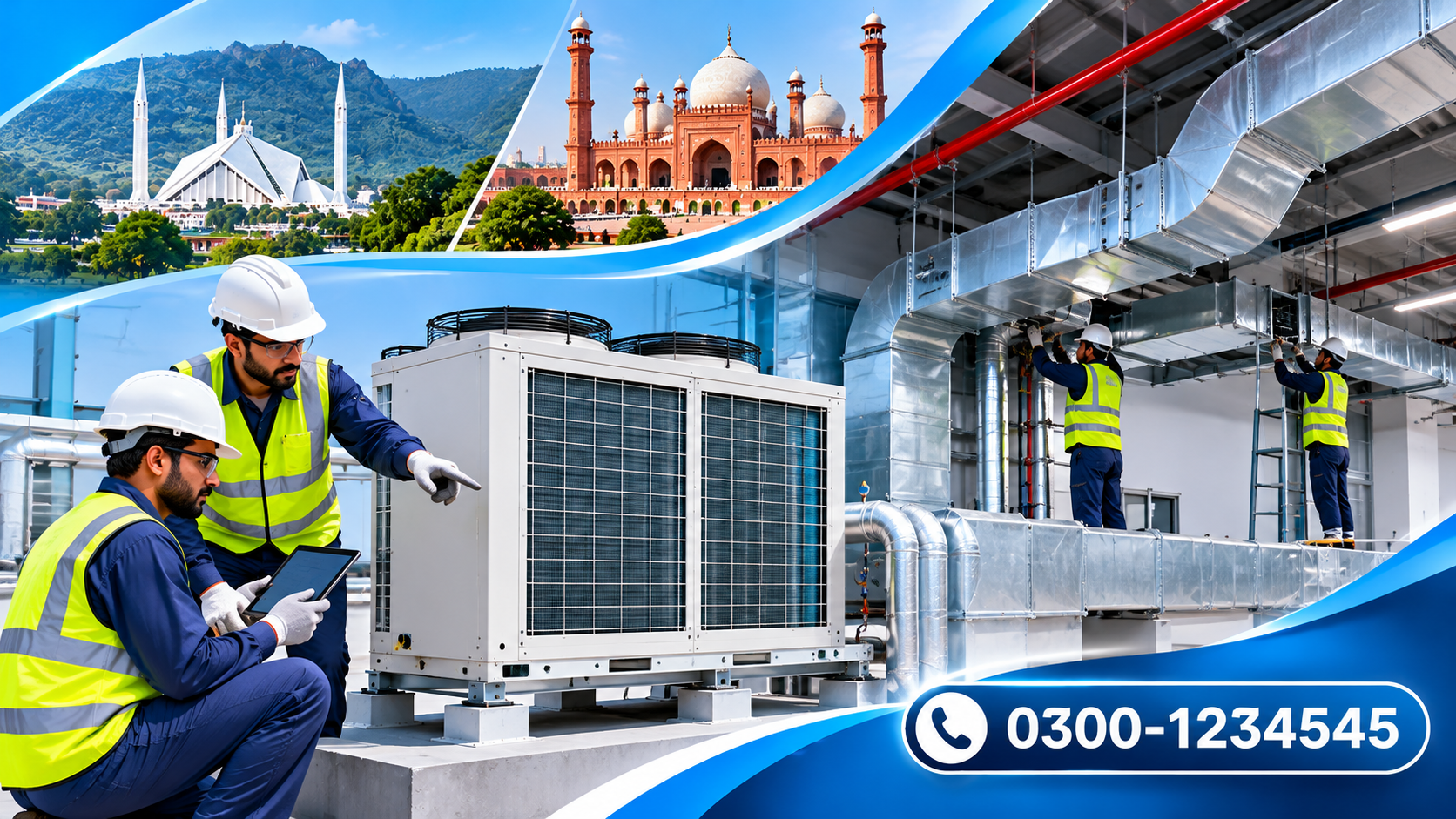
The equipment brand gets most of the attention. Still, the quality of the design and installation decides how well your system performs. Industry experience shows that poor sizing, leaky ducts, and incorrect refrigerant charging are among the most common causes of high bills and early breakdowns.
Here’s what a skilled team protects you from:
Takeaway: Choose your installer as carefully as your equipment. Good design and workmanship drive comfort, efficiency, and system lifespan.
Each building has different needs. This table compares the most common options.
|
System Type |
How It Works |
Best For |
Key Strengths |
Things to Consider |
|---|---|---|---|---|
|
Ducted Split |
One outdoor unit linked to a concealed indoor unit with ducts |
Houses, apartments, small offices |
Clean look, quiet, even cooling |
Needs ceiling space for ducts |
|
VRF / VRV |
One outdoor system connected to many indoor units with variable refrigerant flow |
Offices, hotels, large homes, clinics |
Zone control, strong part-load efficiency, inverter technology |
Higher upfront cost |
|
Air-Cooled Chiller |
Chills water and pumps it to AHUs and fan coil units |
Malls, hospitals, mid-size commercial buildings |
Handles large loads, no cooling tower |
Needs outdoor space and a plant room |
|
Water-Cooled Chiller |
Uses a cooling tower to reject heat |
Large commercial and industrial sites |
High efficiency at very large scale |
Needs water supply and water treatment |
|
Packaged Rooftop Unit |
All components in one rooftop cabinet |
Retail stores, warehouses, single-floor buildings |
Saves indoor space, simple ducting |
Roof must support the weight |
|
Kitchen Exhaust and Make-Up Air |
Removes smoke and heat, replaces it with fresh air |
Restaurants, cafés, commercial kitchens |
Safety, comfort, odor control |
Needs grease filters and regular cleaning |
Takeaway: Ducted splits suit most homes, VRF fits multi-zone buildings, and chillers serve large commercial projects. Restaurants usually need cooling plus a dedicated kitchen ventilation system.
Islamabad’s weather swings from hot, dusty summers to chilly winters. That makes heat pump or reverse-cycle systems a smart choice, since one system can cool in June and heat in January. Strong filtration also matters during dusty months, and voltage protection helps guard equipment against power fluctuations.
A typical central hvac system installation in Islamabad follows these stages:
The best time to plan is during construction or renovation, before false ceilings go up. Early planning keeps ducts hidden and avoids rework.
An hvac system for restaurant in Islamabad has to do far more than cool a dining hall. Commercial kitchens produce intense heat, smoke, grease, and steam. At the same time, guests expect a fresh, comfortable space with no cooking smells drifting in.
Hoods with grease filters capture smoke and heat right at the cooking line. Exhaust fans then push this air safely outside. Proper hood sizing protects staff and lowers fire risk.
When exhaust fans pull air out, fresh air must replace it. Without make-up air, doors become hard to open, hoods stop working well, and smells spread into the dining area. Good designs keep the kitchen at slightly negative pressure compared to the dining room.
Dining spaces change from nearly empty to fully packed within an hour. VRF or zoned ducted systems adjust output to match the crowd, which saves energy during quiet times.
Restaurants in busy commercial areas may need odor filters or extra filtration on exhaust air to avoid bothering neighbors.
|
Restaurant Area |
Main Need |
Recommended Solution |
|---|---|---|
|
Kitchen |
Remove heat, smoke, and grease |
Exhaust hoods, grease filters, make-up air units |
|
Dining Hall |
Steady comfort for changing crowds |
VRF or zoned ducted system |
|
Washrooms |
Odor removal |
Dedicated exhaust fans |
|
Cold Storage |
Stable low temperature |
Separate refrigeration units |
Takeaway: Treat the kitchen and the dining area as two linked systems. Balance airflow between them for safety, comfort, and a pleasant guest experience.
Definition: A turnkey HVAC project means one contractor handles everything, from design to handover. You get a finished, working system without managing multiple vendors.
Turnkey central hvac contractors in Lahore and Islamabad typically manage:
The main benefit is a single point of responsibility. If something isn’t working, one team fixes it. Turnkey projects also reduce delays, because the HVAC team coordinates directly with civil, electrical, and interior contractors.
City conditions matter too. Lahore’s humid monsoon season and winter smog call for good dehumidification and higher-grade air filtration. Islamabad projects often need efficient heating as well as cooling. A contractor working in both cities understands these local differences.
Price matters, but it shouldn’t be your only filter. Compare experience, design capability, and after-sales service.
Electricity costs are a major concern for every building owner. These steps help reduce running costs:
|
Task |
Recommended Frequency |
|---|---|
|
Clean or replace air filters |
Every 1–3 months, more often in dusty seasons |
|
Clean kitchen hood grease filters |
Weekly to monthly, depending on cooking volume |
|
Inspect drains and condensate lines |
Every 3 months |
|
Check refrigerant levels and pressures |
Every 6 months |
|
Clean coils and inspect fans |
Before summer and before winter |
|
Full system service and performance check |
At least once a year |
- Good design and installation matter as much as the equipment brand.
- Always ask for a site survey and written heat load calculation.
- Ducted splits suit homes, VRF suits multi-zone buildings, and chillers suit large commercial sites.
- Restaurants need balanced kitchen exhaust, make-up air, and zoned dining comfort.
- Turnkey projects give you one accountable team from design to handover.
- Inverter systems, zoning, sealed ducts, and regular service cut energy costs.
Cost depends on building size, heat load, system type, equipment brand, ductwork length, and installation complexity. A VRF or chiller system costs more upfront than a ducted split but may save more energy over time. The most accurate way to price a project is a site survey and load calculation.
Smaller residential projects often take one to three weeks after design approval. Larger commercial buildings can take several weeks or months, depending on size and construction progress. Your contractor should give you a clear timeline in the quotation.
Size depends on seating capacity, kitchen equipment, glass area, ceiling height, and sun exposure. Kitchens add large heat loads, so restaurants usually need more capacity than offices of the same size. A professional heat load calculation gives you the correct tonnage.
A turnkey contract covers design, equipment supply, ductwork, installation, testing, commissioning, and handover under one agreement. Working with turnkey central hvac contractors in Lahore and Islamabad means you deal with one team instead of coordinating several vendors.
Neither is better in every case. VRF works well for offices, hotels, and homes that need room-by-room control. Chillers are often more practical for very large buildings with high, steady cooling demand.
Yes, many inverter and VRF systems can work with solar energy setups. This can reduce grid electricity use during the day, when cooling demand is highest.
Plan a full service at least once a year, with filter checks every one to three months. Restaurants and dusty locations need more frequent attention.
The right HVAC system keeps your home comfortable, your business productive, and your energy bills under control. Working with experienced hvac system providers and installation specialists means accurate sizing, clean ductwork, proper commissioning, and dependable support for years to come.
The Ac Hub designs, installs, and maintains HVAC systems for homes, offices, commercial buildings, and restaurants across Islamabad and Lahore. Share your floor plans or project details, and our team will arrange a site survey and a clear, no-obligation quotation.
Call 0300-1234545 or visit theAcHub.pk to book your free HVAC consultation today.